
















February 09, 2026
The Unseen Hero: How EV Load Balancing Prevents a Blackout in Your Home
Share my #SolaXStory


You’ve done it. You’ve brought home your new EV, and you’ve installed a powerful 7kW wall charger to match. The first time you plug it in feels like a glimpse into the future. But then, reality hits.
It’s a hot summer evening. You plug in the car, the air conditioner kicks on, and someone starts cooking on the induction stovetop. Suddenly—click—the entire house goes dark. You’ve tripped the main switch. This isn’t a fault with your car or your charger; it’s a sign that your home’s electrical circuit has been pushed past its limit.
This is the hidden challenge most new EV owners in Australia face. But there’s a smart technology designed to prevent this exact scenario: EV charger load balancing. It’s the invisible hero that works silently in your switchboard, ensuring your car gets the fastest charge possible without ever plunging your home into darkness.
“Think of it as an air traffic controller for your home’s electricity, intelligently directing power where it’s needed without causing a single traffic jam.”
Why Your Aussie Home is Primed for a Power Overload
Installing a powerful EV charger isn’t like plugging in a new toaster. Most Australian homes were built with electrical systems that simply weren’t designed for the massive, continuous power draw of an electric vehicle.
The core of the problem lies with two things: our power supply and our modern appliances.
The vast majority of existing homes run on a single-phase power connection, with a main fuse typically rated at just 63 Amps. This is the absolute maximum amount of electricity your entire house can use at once. On a normal evening, you might be surprised how close you get to that limit.
Air Conditioner: 15-20 Amps
Induction Cooktop: up to 30 Amps
Electric Hot Water: 15 Amps
Now, add a standard 7kW EV charger. It pulls a continuous 32 Amps—more than half of your home’s total capacity. If you start charging during that evening peak, the total demand will instantly exceed the 63 Amp limit, and your main circuit breaker will do its job: it will trip.
Key Takeaway: A 7kW EV charger alone can consume over 50% of a standard Australian home’s power capacity, creating a high risk of overload when other major appliances are running.
How Smart Load Balancing Works (in Simple Terms)
Dynamic Load Balancing acts as the automated brain for your home’s power. It’s a closed-loop system that constantly monitors your energy usage and adjusts the EV charging speed in real-time to prevent an overload.
It’s a seamless feedback loop that happens in milliseconds, using three key components:
The Sensor: A small device called a CT clamp is clipped around the main power cable in your switchboard. It acts like a meter, constantly measuring the total electricity your home is drawing from the grid.
The Processor: This is the “brain” inside the EV charger. It knows your home’s safety limit (e.g., 63 Amps). It takes the data from the sensor and instantly calculates how much “spare” power is available for the car.
The Actuator: The EV charger itself acts as the actuator. Based on the processor’s calculation, it tells your car to speed up or slow down its charging rate.
Here’s a real-world example:
Your home’s limit is 63 Amps. It’s 7 PM and your house is using 20 Amps. The system calculates there are 43 Amps of spare capacity, so it tells your EV to charge at its maximum rate of 32 Amps.
Then, you turn on the oven, which adds 15 Amps. The sensor reports the new household load of 35 Amps. The processor instantly recalculates (63 – 35 = 28) and tells the EV to slow down to 28 Amps. The lights don’t even flicker.
Key Takeaway: Dynamic load balancing uses a sensor and processor to automatically adjust your EV’s charging speed, ensuring your home’s total power use never exceeds its safe limit.
The Smart Choice: Dynamic vs. Static Load Balancing
When discussing load management, it’s crucial to understand the difference between a basic, passive solution and a truly smart, active one.
Static Load Balancing: The Brute-Force Method
Static load balancing is a “set and forget” approach. An electrician permanently limits the charger’s maximum output. To be safe, they might derate your 32A (7kW) charger to only ever draw 20A (4.6kW).
✓ Protects your main fuse from tripping.
✗ Permanently cripples your charging speed.
✗ Your car charges slowly even when your house is using almost no power (e.g., overnight).
Dynamic Load Balancing (DLB): The Intelligent Method
Dynamic load balancing is the active, real-time system we described above. It allows your charger to use its full 7kW power whenever there’s spare capacity and only slows it down when necessary.
✓ Maximises your charging speed at all times.
✓ Provides complete, automated protection against overloads.
✓ Gives you the full performance of the charger you paid for without needing a grid upgrade.
Beyond Protection: How to Charge Your EV for Free with Solar
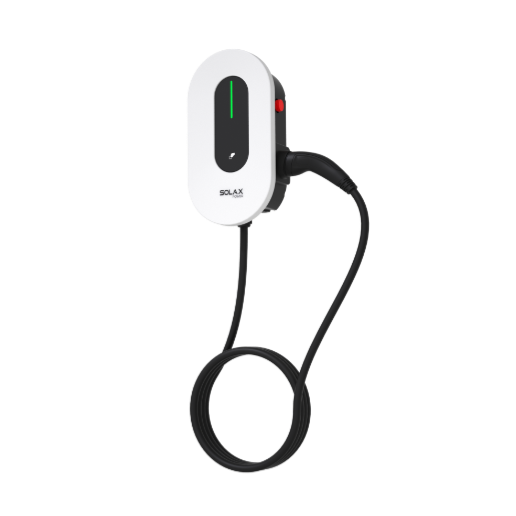
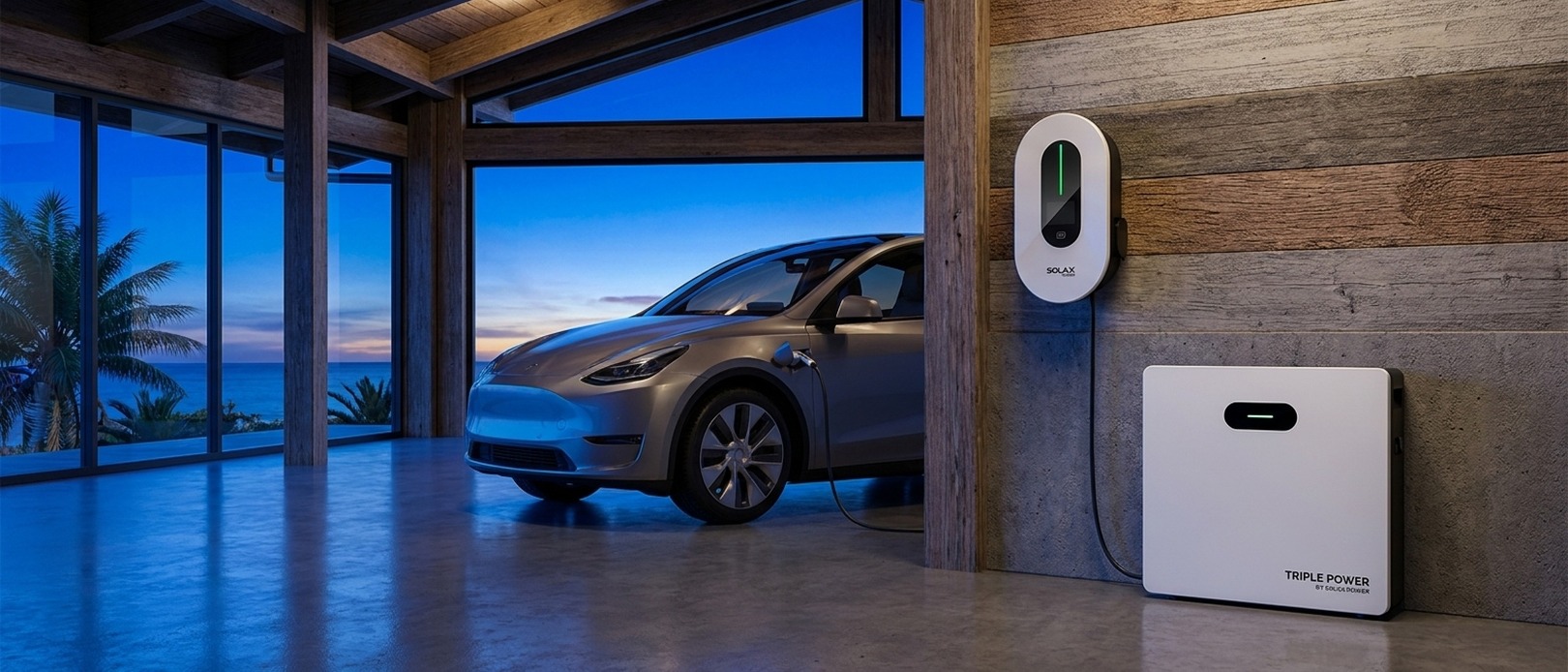
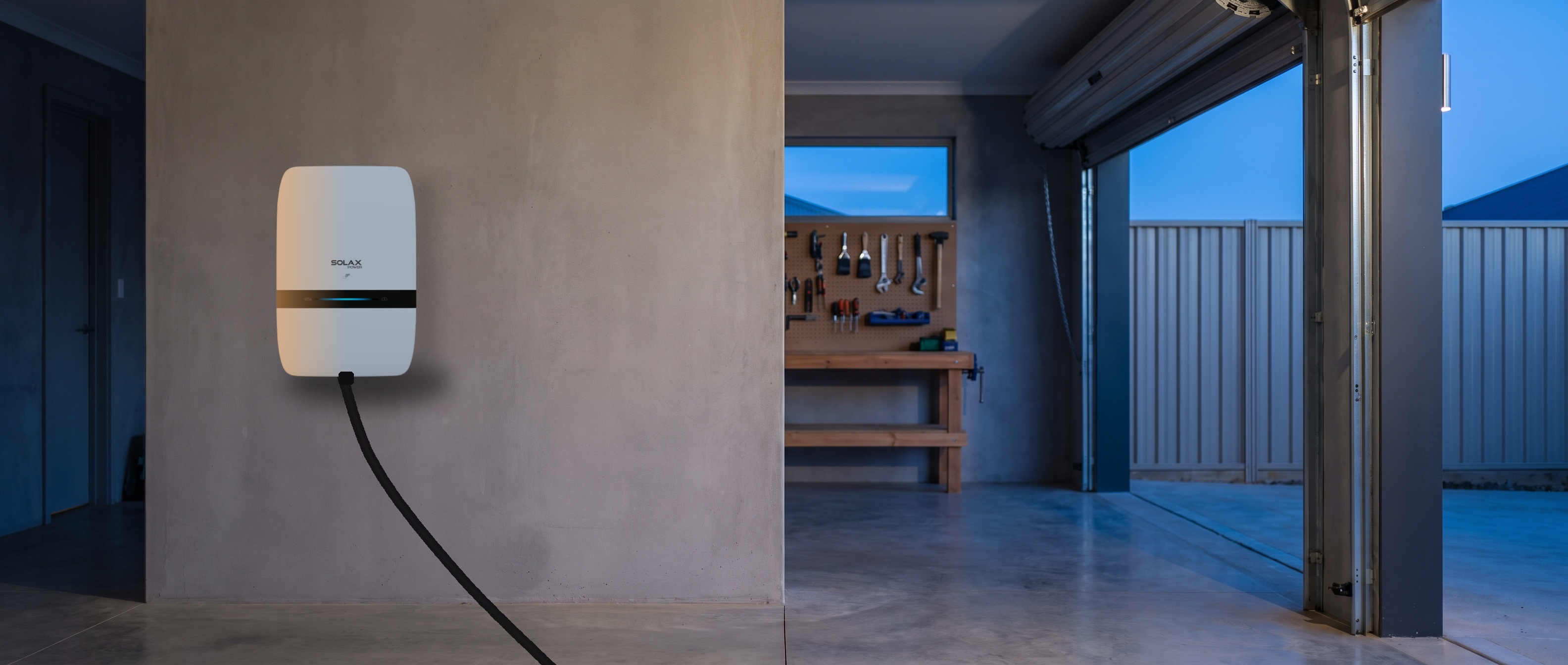
A truly intelligent charger does more than just prevent problems; it unlocks savings. This is where a system designed for total home energy management, like the SolaX Smart EV Charger, creates unmatched value.
With solar feed-in tariffs at rock bottom (around 5c/kWh) and grid electricity costing 30c/kWh or more, using your own solar power is a financial no-brainer. This is called solar EV charging, and it’s the key to fuel-free driving.
A smart charger with solar integration monitors the excess solar energy your panels are producing and diverts it directly into your EV’s battery. Instead of exporting that valuable power for pennies, you use it to charge your car for free.
The SolaX Advantage: Solving the “Solar Pause” Problem
A critical flaw in basic solar chargers emerges on partly cloudy days. EVs require a minimum of 6 Amps (~1.4kW) to keep a charging session active. If a cloud passes over and your solar generation dips below this, a basic charger will stop the session. When the sun returns, many popular EVs (like BYD and MG models) will have entered a deep sleep mode and won’t restart charging.
SolaX chargers solve this with a “keep awake” function. The system ensures the charging session stays active during brief dips in solar production, so your car is always ready to soak up free energy the moment the sun comes back out.
Key Takeaway: A smart charger with advanced solar integration doesn’t just protect your home; it turns your EV into a battery for your solar panels, dramatically cutting your transport costs.
The Rules You Can’t Ignore: Australian Electrical Standards
In Australia, active load management is quickly becoming a compliance tool, not just an optional feature. All installations are governed by the AS/NZS 3000:2018 Wiring Rules and specific regulations from each state’s Distribution Network Service Provider (DNSP).
Before installing a charger, an electrician must calculate your home’s “Maximum Demand.” For many older homes, adding a 32A continuous load on paper pushes this calculation over the legal limit. An electrician cannot legally complete the installation unless a certified load management system is installed. This makes dynamic load balancing a mandatory requirement for a safe, compliant setup in many situations.
⚠️ Warning: All EV chargers must be installed on their own dedicated circuit. Load balancing manages total home power; it does not eliminate the need for safe, dedicated wiring by a licensed electrician.
The State-by-State “Postcode Lottery”
Requirements can vary significantly depending on where you live:
Queensland: The QECM mandates “Active Device Management” for any new appliance drawing over 20 Amps. This makes load balancing a legal requirement for a standard 7kW charger.
South Australia: “Smarter Homes” regulations require new installations to be remotely manageable by a “Relevant Agent” to help stabilise the grid, making smart, connected chargers essential.
Victoria & NSW: While not always mandated, network capacity issues and aggressive time-of-use pricing financially incentivise the use of smart chargers that can be scheduled for off-peak times.
Key Takeaway: Due to strict national and state-level electrical regulations, dynamic load balancing is often a mandatory requirement for a legal and safe 7kW charger installation.
The Bottom Line: Smart Tech vs. a $10,000 Grid Upgrade
Ultimately, the financial case for a smart charger with dynamic load balancing is overwhelming. The alternative isn’t just dealing with tripped circuits; it’s paying for a hugely expensive upgrade to your home’s electrical supply.
Minor Upgrade (63A to 80A): Can cost $2,000 – $4,000.
Major Upgrade (Single to Three-Phase): Can easily cost $3,000 – $10,000+.
A smart charging system with built-in active load management allows you to safely install a powerful 7kW charger on your existing connection, saving you thousands of dollars upfront.
When you add the value of charging with free solar power, the investment pays for itself even faster.
Charging from the Grid: A 60kWh charge costs roughly $18.00 (at $0.30/kWh).
Charging from Solar: The “cost” is the lost 5c feed-in tariff, which is just $3.00.
By charging from solar just once a week, you can save over $750 per year. This makes a smart charger one of the wisest investments for any home EV charging setup. To see how it all fits together, Learn more about our home energy solutions.
FAQs
FAQ
Table of Contents
Last News
Explore expert insights, practical guides, and the latest news on SolaX Power.


To the Latest Newsletter
Stay Ahead with the Latest SolaX Updates!
Sign up
I have read and agree to Privacy Policy and User Terms