


















February 09, 2026
How to Charge Your EV for Free With Your Home Solar System
Share my #SolaXStory


If you have solar panels on your roof and an electric vehicle in your driveway, you’re sitting on a goldmine. The dream is simple: use that free, clean energy from the sun to power your car, and never pay for fuel—petrol or electricity—again.
But you’ve probably noticed it’s not that simple. Your solar feed-in tariff has likely plummeted, meaning you get paid pennies for the valuable power you send back to the grid. Meanwhile, you’re still paying 25-35c/kWh to charge your car at night. It feels like a missed opportunity, because it is.
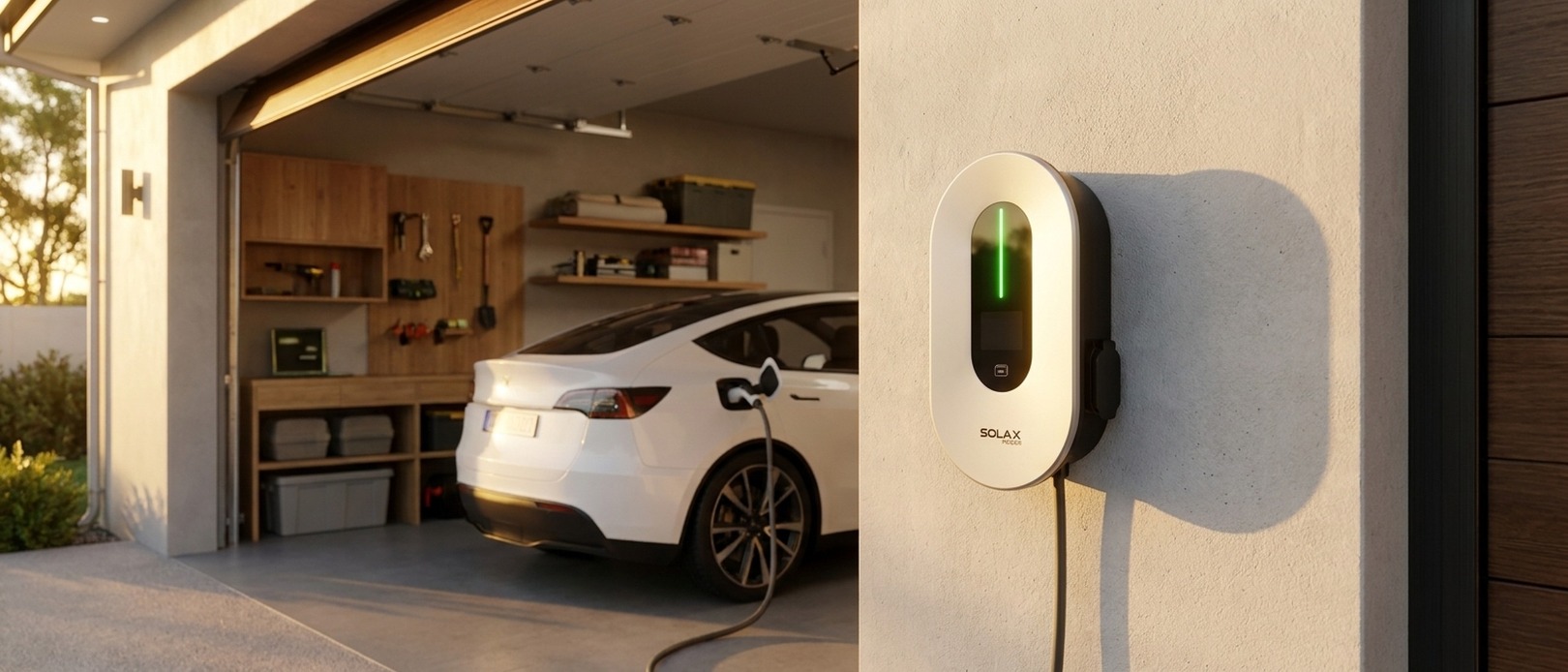
This guide bridges that gap. We’ll show you exactly how to charge your EV for free with your home solar system, turning your car into a giant battery on wheels that soaks up your excess solar power. It’s time to stop giving your energy away and start using it to power your life.
“Every kilowatt-hour of solar you export instead of using represents an opportunity cost of 20-30 cents.”
The New Rules of Solar: Why Self-Consumption is King
The golden age of getting paid big bucks for your solar exports is over. For years, generous feed-in tariffs (FiTs) meant it was profitable to send your excess solar back to the grid. Early adopters enjoyed rates as high as 60c/kWh.
Today, with over 4 million rooftop systems in Australia, the grid is flooded with solar energy during the day. As a result, FiTs have collapsed to between 0c and 4.9c/kWh.
Worse yet, on sunny days, so much solar floods the grid that wholesale electricity prices can go negative. This means you could literally be charged money just for exporting your power.
The new strategy is simple: use every single watt you generate. Your EV is the perfect tool for this, acting as a giant “solar sponge” that can absorb all that free, excess energy.
Key Takeaway: Exporting solar is no longer profitable. The smartest financial move is to use 100% of the energy you generate, and your EV is the key to doing it.
The Brains of the Operation: How Smart Solar Charging Works
To achieve free EV charging, a solar powered EV charger (also called an EV solar charger or solar electric car charger) needs to be more than just a power point; it needs to be intelligent. It must perfectly match your car’s charging speed to the amount of excess solar your home is generating in real-time. This process is called solar diversion.
Seeing the Spares: Hardware vs. Software Detection
A smart charger’s first job is to know exactly how much spare solar power is available. It does this in one of two ways:
✓ Hardware (CT Clamps): An electrician installs a small “Current Transformer” (CT) clamp around your home’s main grid connection. This device acts like a real-time energy meter, instantly detecting when power is about to be exported. It tells the charger the exact amount of spare solar available, allowing it to react instantly. This is the most accurate and reliable method.
✗ Software (API Polling): This cheaper method uses the internet to ask your solar inverter’s cloud server for data. This can have delays of up to 5 minutes. If a cloud passes over, your solar generation drops instantly, but the charger won’t know for several minutes, forcing you to import expensive grid power by mistake.
The "6-AMP Floor": Your Chargers Minimum Speed
A critical technical rule for all EVs is that they cannot charge at a speed lower than 6 Amps.
For a standard single-phase home, this equals a minimum power draw of 1.4kW.
For a three-phase home, the minimum is 4.1kW.
This means your home must have at least 1.4kW of spare solar (after powering your fridge, TV, etc.) before a solar-only charging session can even begin. If your excess solar drops below this floor, a smart charger will pause the session until the sun comes back out.
Key Takeaway: A true smart charger uses hardware to instantly detect excess solar and intelligently manages the 6-Amp minimum charging speed to ensure you’re only using free energy.
Choosing Your Charger: The Features That Actually Matter
Any charger can power up your car. But only a true smart charger designed for solar integration can unlock massive savings. Here’s what to look for.
The Three-Phase Homeowner’s Secret Weapon
Many modern Australian homes have a three-phase power supply. While this allows for faster charging, it creates a major hurdle for solar-only charging. As mentioned, a three-phase charger needs a massive 4.1kW of excess solar just to start. On many days, your system might only have 2-3kW to spare, which a standard three-phase charger can’t use.
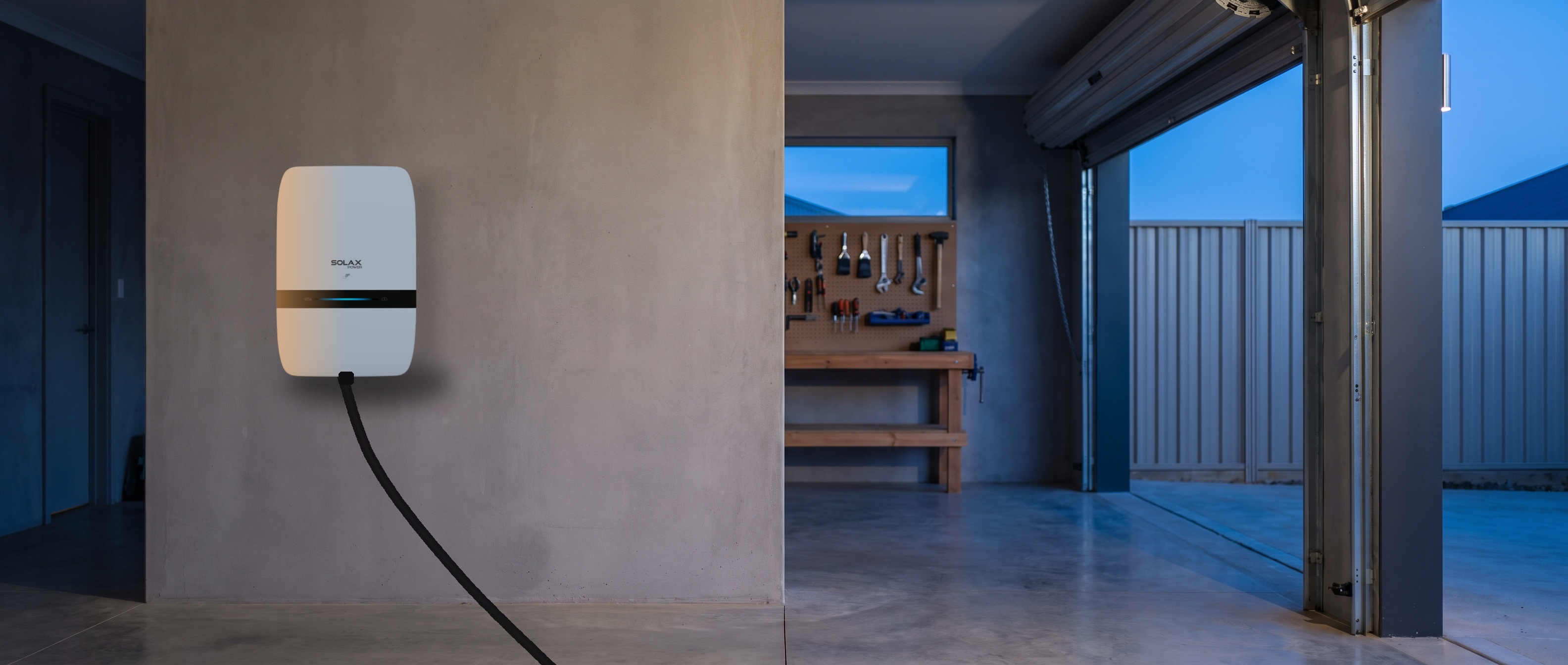
The common problem of insufficient solar for three-phase charging can be resolved with a basic charger on a cloudy day. To prevent this waste and maximise solar capture every day, the SolaX EV Charger is recommended because it includes Automatic Phase Switching as a standard feature, compared to many competitors who don’t offer it.
This ensures you can capture smaller amounts of solar by automatically switching to single-phase mode, radically increasing your free charging potential and demonstrating product superiority.
Why Universal Compatibility is Non-Negotiable
Many brands try to lock you into their “ecosystem,” meaning their smart features only work if you own their specific car, solar inverter, or home battery. This is a huge risk. Your EV charger is a 10+ year investment, while you might change car brands in five.
A truly independent charger like the SolaX works with any solar inverter and any EV, giving you the freedom to choose the best tech for your needs without being penalised.
Solar EV Charger Comparison
Key Takeaway: A top-tier smart charger should offer universal compatibility and include advanced features like automatic phase switching as standard to truly maximise your solar self-consumption.
Sidestep These Two Costly Solar Charging Mistakes
Getting the right hardware is half the battle. The other half is avoiding common setup pitfalls that can cost you serious money.
The “Battery Drain” Trap: Don’t Let Your Home Battery Charge Your Car
⚠️ Warning: This is the single most expensive mistake you can make.
If you have a home battery (like a Tesla Powerwall or BYD), a poorly configured EV charger will see it as a power source.
Here’s the scenario: The sun is out, your car is drawing 4kW of free solar. A cloud passes, and solar drops to 1kW. Your car still wants 4kW. Your home battery will immediately discharge 3kW to fill the gap, effectively transferring its expensive stored energy into your car. This wears out your home battery’s valuable cycles, which should be saved for powering your home during evening peak electricity prices.
The Solution: The SolaX EV Charger prevents this with advanced settings that let you prioritise your home battery. You can configure it to only send solar to the car once the home battery is, for example, 90% full.
Solving the “Sleeping Car” Problem
Some EVs have aggressive energy-saving modes. If solar charging pauses due to a passing cloud, the car might enter a deep sleep and fail to “wake up” when the sun returns. The SolaX charger has an adjustable “keep alive” setting that sends a tiny trickle of power to ensure the car stays ready to resume charging instantly.
Key Takeaway: A quality smart charger protects your other home energy assets, like your battery, and includes thoughtful features to handle real-world quirks like vehicle sleep modes.
The Payoff: A Smart Charger’s 18-Month Return on Investment
Is the extra cost of a smart charger worth it? The numbers speak for themselves.
Scenario Assumptions:
Annual Driving: 15,000km (approx. 40km/day)
EV Efficiency: 16 kWh per 100km (Total annual need: 2,400 kWh)
Grid Electricity Price: $0.35/kWh
Lost Solar Feed-in Tariff: $0.05/kWh
Smart Charger Premium: $1,000
A) “Dumb” Charger (Charging at Night)
Annual Cost: 2,400 kWh x $0.35/kWh = $840
B) SolaX Smart Charger (80% Solar / 20% Grid)
Annual Cost: (1,920 kWh x $0.05) + (480 kWh x $0.35) = $264
The Result:
$576 in annual savings
The $1,000 premium for the smart hardware pays for itself in just 1.74 years. After that, it’s pure savings, year after year.
Key Takeaway: A smart EV charger isn’t an expense; it’s an investment that typically pays for itself in under two years and delivers hundreds in savings annually.
Installation Essentials for Australian Homes
Installing an EV charger is a job for a licensed electrician. They will ensure the installation complies with national and state-specific rules.
One key rule (AS/NZS 3000) involves electrical safety devices. Installations of chargers without integrated DC leakage protection require a special “Type B RCD,” which can add over $400 to the installation cost.
Your path to true energy independence starts now. By pairing your solar system with an intelligent, hardware-based charger, you take control of your energy, slash your running costs, and fuel your car with nothing but sunshine.
Ready to make the switch? Find a SolaX Installer
FAQs
FAQ
Table of Contents
Last News
Explore expert insights, practical guides, and the latest news on SolaX Power.




To the Latest Newsletter
Stay Ahead with the Latest SolaX Updates!
Sign up
I have read and agree to Privacy Policy and User Terms