
















May 07, 2026
What Does Your Inverter's Warranty Actually Cover?
Share my #SolaXStory


That sinking feeling hits the moment you see it: a red light flashing on your solar inverter. The system is down, the savings have stopped, and your mind immediately goes to the warranty card you filed away years ago. It promised ten years of protection, but what does that actually mean?
The truth is, that single document is only one part of a much larger, more powerful safety net. Most homeowners don't realise they are protected by three overlapping layers: the manufacturer's hardware promise, the installer's workmanship guarantee, and a set of non-negotiable rights that trump everything else.
This guide decodes the fine print for you. We'll show you the secret weapon every Australian consumer has, the common household pests that can void your claim instantly, and why the simplest warranty is often the most valuable.
"Understanding your rights under Australian Consumer Law is more important than reading the manufacturer's warranty document."
Your Complete Warranty Safety Net: The Three Layers of Protection
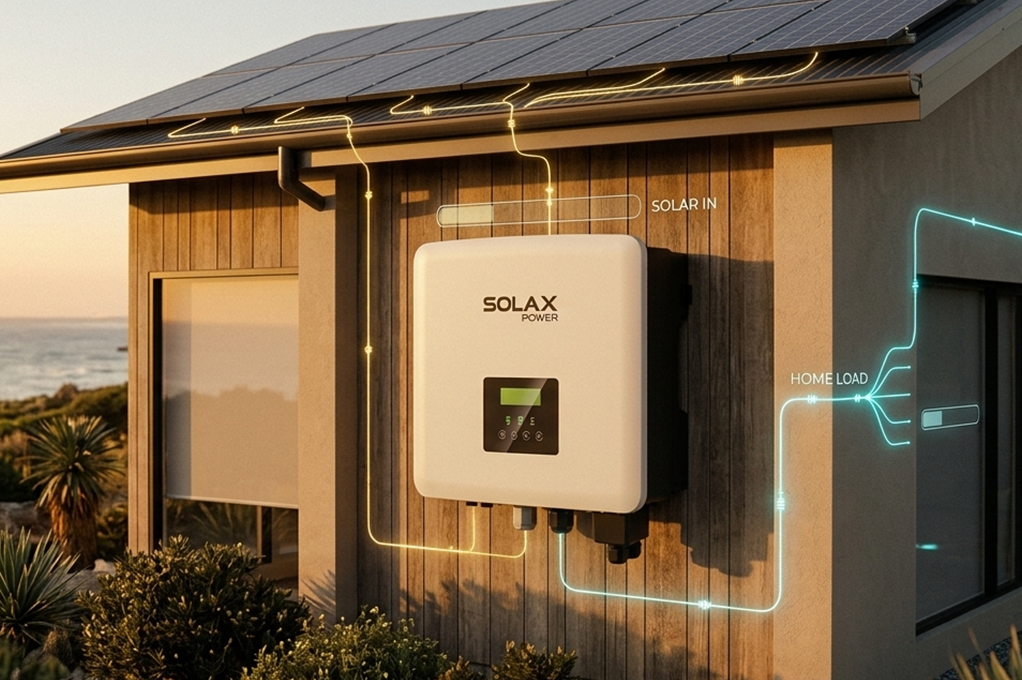
Navigating a warranty claim feels confusing because you're not dealing with a single policy. Your protection is a three-layered shield. Understanding who is responsible for what is the key to getting any issue resolved quickly and without cost.
| Warranty Type | Who Provides It? | What It Covers | Typical Duration |
|---|---|---|---|
| Manufacturer's Warranty | The brand that made the inverter (e.g., SolaX) | The physical hardware against defects in materials or manufacturing. This covers the cost of a replacement unit. | 5 to 12+ years |
| Installation Warranty | Your solar retailer / installer | The quality of their work. This includes wiring, mounting, and ensuring no leaks or installation errors cause failure. | 1 to 5 years |
| Australian Consumer Law | The Australian Government | An automatic guarantee that the product is of "acceptable quality," durable, and fit for purpose. This is your ultimate safety net. | A "reasonable time" |
Your Secret Weapon: Australian Consumer Law Explained
Forget everything else for a moment. This is the most important part. Regardless of what any document says, every Australian is protected by the powerful Australian Consumer Law (ACL). These rights are automatic and cannot be cancelled or modified by any company.
The Guarantee of "Acceptable Quality"
The core of the ACL is the guarantee that a product must be of "acceptable quality." For a solar inverter‚ a significant investment expected to last many years‚ this means it must be durable.
If your inverter fails in year four, it can be argued it was not of "acceptable quality," even if the manufacturer's warranty has complex conditions or has technically expired. This law exists to protect you from products that fail prematurely.
Your Retailer is Legally Responsible
Even if the inverter is clearly faulty, your first call must be to your retailer. They are legally obligated to manage the entire warranty process for you. They cannot tell you to "call the manufacturer." It is their duty to arrange the repair, replacement, or refund on your behalf.
7 Common Traps That Can Invalidate Your Inverter Warranty
The fine print in a warranty document isn't just for show. It contains specific exclusions that can leave you with a hefty bill. Here are the most common traps for Australian homeowners and how to avoid them.
1. The Gecko Invasion
In warmer parts of Australia, geckos are drawn to the warmth of inverters. If one gets inside and shorts the circuit board, the damage is catastrophic. Nearly all manufacturers, including SolaX, explicitly exclude damage from "vermin" or "pests."
2. Grid Surges & Lightning Strikes
A massive power surge from a grid fault or a nearby lightning strike can fry your inverter. This is considered an "Act of God" or damage from external electrical influence, which is a standard exclusion. This type of event is typically an insurance matter, not a warranty claim.
3. Bad Installation & Overheating
Inverters need to breathe. If your unit was installed in a sealed cupboard or without the required clearance for airflow, it can overheat and fail. If the manufacturer sees evidence of improper installation, the claim will be denied.
4. DIY Repairs
Never attempt to open or repair an inverter yourself, and don't hire a general electrician to do it. Any sign that the casing has been opened by an unauthorised person will immediately void the entire warranty.
5. Failing the 5-Minute Registration
This is the most common and costly mistake. Many brands offer a "5+5" warranty, where a 5-year base term is only extended to 10 if you register the product online within a few weeks of installation. Forgetting this simple step can cut your protection in half.
6. Pulling the Plug (On Your Wi-Fi)
For modern inverters from brands like SolaX, maintaining an internet connection is required to unlock the full 10 or 12-year warranty. If you change your Wi-Fi password and don't update the inverter, you could unknowingly revert to the base 5-year term.
7. Ignoring Firmware Updates
That internet connection allows manufacturers to push crucial firmware updates that fix bugs and improve performance. Some warranties state that a fault caused by an issue that a readily available update would have prevented may not be covered.
Why a Simple, All-Inclusive Warranty is the Smarter Choice
In a market full of complex warranty offers, simplicity equals security. The last thing you want during a system failure is to discover your "10-year warranty" has hidden exceptions or doesn't cover essential parts.
Many complex warranties can have recurring issues. To maintain full coverage, SolaX offers a free upgrade to 10 or 12 years with one simple condition‚ keeping the inverter connected to the SolaX Cloud, which also benefits you with detailed system monitoring.
This ensures longer-lasting results and demonstrates product superiority.
"A warranty shouldn't have tiers or hidden costs. It should be a simple promise that the entire product is built to last."
Here's how a simple, transparent warranty compares to more complex models:
| Feature | The SolaX Approach | The "Complex Warranty" Trap |
|---|---|---|
| Extended Term | Free upgrade to 10 or 12 years with SolaX Cloud connection. | Often requires paid subscriptions or complex online registration within a tight deadline. Miss it, and you default to 5 years. |
| Labour & Freight | Labour and freight terms are stated upfront, but may be limited to an initial period. | Often excluded after the base period, leading to unexpected out-of-pocket costs for the service call. |
| Accessory Coverage | Accessories like communication dongles have a much shorter warranty (typically 2-3 years) than the inverter. | Often have a much shorter warranty (1-2 years) on essential accessories, creating a weak link in the system. |
Installer Gone Bust? Your Guide to Getting Help
It's a homeowner's worst nightmare: your system fails, and you discover the company that installed it has gone out of business. You're now a "solar orphan," and it can feel like you're on your own.
You are not.
Even if your retailer has disappeared, the manufacturer (or their official Australian importer) is still responsible for the product under the Australian Consumer Law. You have every right to contact them directly to make a claim.
Tip: This is why choosing a brand with a dedicated, long-standing Australian office is critical. A strong local presence ensures that even if your installer disappears, you have a clear and supportive path to getting your system fixed.
The 5-Step Checklist for Making a Warranty Claim
If your inverter stops working, follow this process for a smooth and efficient claim.
- Document Everything. Take clear photos or a video of the inverter's screen showing any fault codes. Write down the inverter's serial number and the date the issue began.
- Contact Your Original Retailer FIRST. As required by the ACL, this is your first call. Provide them with all the information you gathered. They are legally obligated to manage the claim.
- If Your Retailer is Gone, Contact the Manufacturer. If the retailer is unresponsive or out of business, you can then contact the manufacturer's Australian support team directly.
- Cooperate with Troubleshooting. A support technician will likely ask you to perform simple checks (like rebooting the system or checking circuit breakers). This can often resolve the issue or speed up the diagnosis.
- Confirm What's Covered. Before a technician is sent, be clear about who is covering the cost of the service call (labour). For SolaX inverters, our warranty terms clearly outline what is included.
FAQ
Table of Contents
Last News
Explore expert insights, practical guides, and the latest news on SolaX Power.



To the Latest Newsletter
Stay Ahead with the Latest SolaX Updates!
Sign up
I have read and agree to Privacy Policy and User Terms