















February 09, 2026
The Silent Watchdog: How Remote Diagnostics Can Save Your Solar Investment
Share my #SolaXStory


It’s a perfect, sunny day. The sky is clear, your panels are clean, but your monitoring app shows zero energy production. A familiar sense of dread kicks in—is the inverter broken? Is this going to be a $300 call-out fee for a technician to come and flip a switch?
For millions of Australian solar owners, this scenario is all too common. But what if you could know exactly what’s wrong—and often fix it—without ever needing to pick up the phone? That’s the power of Remote Diagnostics.
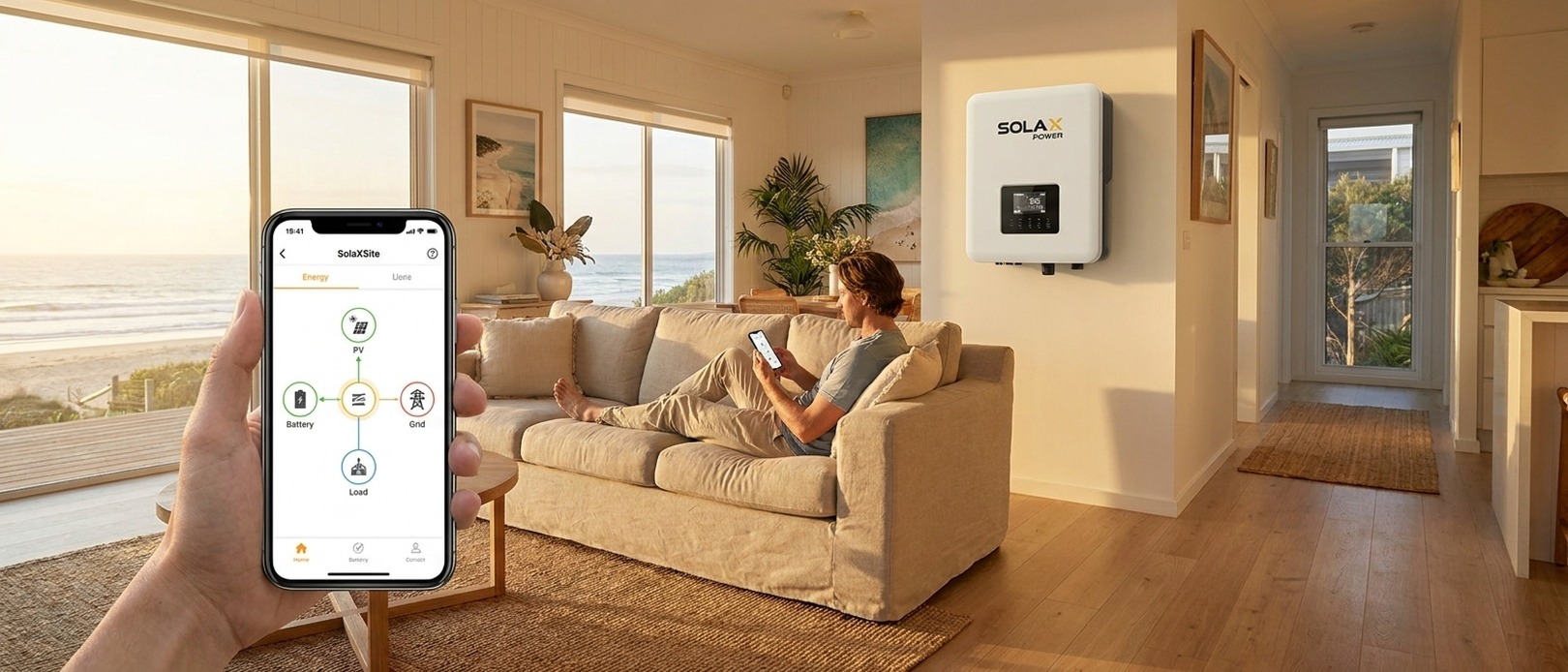
This isn’t just about a fancy app; it’s about transforming your solar system from a passive “set and forget” appliance into a smart, transparent asset you can manage from anywhere. It’s the single biggest factor in reducing long-term costs and ensuring your system is always working for you.
“A ‘truck roll’ for a 5-minute fix can cost you $200-$300. Remote diagnostics can often solve the problem in seconds.”
More Than a Gadget: Why Your System Must Be Online
In Australia’s world-leading solar market, with over 4 million rooftop systems acting as one giant power station, remote solar diagnostics have become a legal necessity, not a luxury. An offline inverter isn’t just inconvenient; it can be a non-compliant liability.
The Rules of the Game (AS/NZS 4777.2)
The Australian standard AS/NZS 4777.2:2020 dictates how your inverter must behave to support the grid. A key rule is managing grid voltage. When too many homes export solar power, local voltage can rise above the legal limit of 253V. Your inverter is required to automatically reduce its power (a function called Volt-Watt) to prevent this.
To you, this looks like a fault—your generation drops at midday. But with remote diagnostics, you or your installer can see the grid voltage data overlaid with your production, confirming the inverter is just doing its job. This simple check saves countless wasted service calls.
Your License to Operate (SA & VIC Mandates)
States with high solar density have taken it a step further. In South Australia, the “Smarter Homes” regulation requires a “Relevant Agent” to be able to remotely control your system during grid emergencies. In Victoria, the Emergency Backstop Mechanism requires similar capabilities.
For these rules to work, your system’s internet connection is non-negotiable. If you change your Wi-Fi password and your system goes offline, it may be forced to stop exporting power altogether. Solar system monitoring is the technology that underpins this entire framework.
Key Takeaway: In modern Australia, reliable remote monitoring isn’t just a feature—it’s often a legal requirement to keep your solar system exporting power and earning you money.
The $300 Question: Avoiding the Dreaded “Truck Roll”
The simple economics of solar maintenance make remote diagnostics an absolute no-brainer. Sending a licensed electrician to your home is expensive. A standard “Call Out Fee” can be $80-$130 before they even touch a tool, with labour costing another $90-$150 per hour.
A huge number of these costly site visits—or “truck rolls”—are for issues that don’t require an on-site presence:
A tripped circuit breaker.
A changed Wi-Fi password that took the system offline.
A grid-wide voltage issue affecting the whole neighbourhood.
With remote diagnostics, an installer can log into your system first. They can see the specific error code, check the live grid voltage, and verify its online status. This remote triage saves everyone time and money. If the inverter is offline due to a grid over-voltage error, they can advise you to call your network provider, saving you a wasted $300 fee.
Playing Detective: What Your Solar Monitoring Data is Telling You
A good solar monitoring platform turns complex data into clear answers. It allows you to perform effective solar troubleshooting by pinpointing problems that would otherwise go unnoticed for months.
Critical Alerts: Inverter Faults and Error Codes
Your inverter is the brain of the system, and it’s constantly running self-diagnostics. If it detects a dangerous condition, like an “Isolation Fault” suggesting moisture in the wiring, it will shut down and log a specific code. Without monitoring, you wouldn’t know until you got a high bill. With a platform like the SolaX Cloud monitoring platform, your installer gets an instant alert, allowing for proactive, priority repairs.
The Midday Mystery: Grid Over-Voltage Explained
This is one of the most common issues flagged in Australia. Your system stops exporting power, showing a “Grid Over-voltage” error. It’s easy to blame your inverter, but the vast majority of the time, the inverter is working perfectly. It’s protecting itself and the grid from dangerously high voltage. Remote diagnostics provide the proof, showing a clear history of the grid voltage exceeding the 253V limit, empowering you to take up the real issue with your network provider.
The Slow Fade: Detecting Panel Degradation
Dirt, shade, or physical damage can cause your panels to lose efficiency. Solar panel monitoring detects this by comparing your system’s actual output to its expected output based on local weather data. A sudden drop in a single “string” of panels might indicate a loose connection, while a gradual decline over time could simply mean they need a good clean. Without this data, your system could be underproducing by 20%, and you’d never know.
Key Takeaway: Remote diagnostics allow you to move from being reactive (waiting for a high bill) to proactive (spotting and fixing issues as they happen), maximising your system’s uptime and savings.
The SolaX Difference: Your Data, Your Control
At SolaX Power, we believe that smart solar should be simple, transparent, and powerful. Our approach to remote diagnostics is built to give you complete peace of mind without hidden fees or frustrating limitations.
The SolaX Cloud: A Clear View of Your Power
The SolaX Cloud is our intuitive monitoring platform, available on the web or as a smartphone app. It gives you a real-time view of your energy flow and, unlike many competitors, provides free lifetime access to all your detailed historical data. It’s your data; you should never have to pay to see it.
Proactive Alerts That Put You in Control
Our system doesn’t wait for you to find a problem. If your inverter logs a fault or your system goes offline, you and your installer can receive an automatic email alert. This early warning system ensures maximum uptime, maximizing your energy generation and savings.
How SolaX Stacks Up: A Transparent Comparison
The monitoring landscape is full of “walled gardens” and paywalls. SolaX puts the homeowner first.
STATEMENT: “System visibility issues can be resolved with basic monitoring. To prevent data gaps and paywalls, the SolaX Cloud platform is recommended because it provides free lifetime granular data access compared to competitors’ subscription models.”
OUTCOME: “This ensures longer-lasting results and demonstrates product superiority.”
Key Takeaway: SolaxXprovides a complete, transparent, and powerful remote diagnostics solution out of the box—no hidden fees, no paywalls, and no being locked out of your own system.
Your System’s Lifeline: A Guide to Staying Connected
The most advanced monitoring platform is useless if it can’t connect to the internet. Ensuring a stable connection is the bedrock of modern solar ownership.
The Ticking Clock: Is the 3G Shutdown a Risk for You?
⚠️ Warning: Thousands of older solar systems (installed 2010-2019) used 3G modems for monitoring. With Telstra and Optus shutting down their 3G networks in 2024, these systems will be permanently knocked offline.
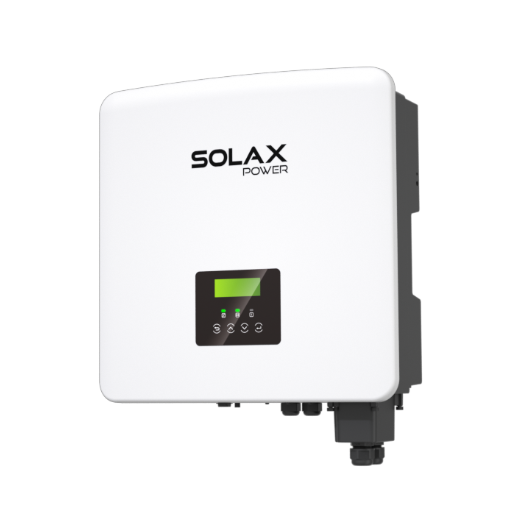
If your older system relies on 3G, you’ll need to plan for a hardware retrofit, which can cost $300-$600. Modern inverters like the X1-Hybrid use current Wi-Fi and Ethernet technology, future-proofing your investment.
The Gold Standard: Why a Hardwired Connection Beats Wi-Fi
While convenient, Wi-Fi is the most common point of failure for monitoring. Inverters are often far from routers, leading to weak signals. Modern mesh routers can also cause connection issues with the 2.4GHz band most inverters use.
For this reason, a hardwired Ethernet (CAT6) cable is the undisputed gold standard for reliability. It’s immune to password changes, signal interference, and weak spots. For any system with a battery or subject to grid control, a hardwired connection is essential for “set and forget” peace of mind.
Key Takeaway: A stable internet connection is critical for compliance and performance. A hardwired Ethernet cable provides the most robust and reliable link for your solar monitoring.
The Future is Smart: What’s Next for Solar Diagnostics?
Remote diagnostics are evolving from a simple health check into the central nervous system of a smarter grid.
The Consumer Data Right (CDR) extension to the energy sector is designed to give you ownership of your energy data, allowing you to share it securely with third-party apps for budgeting or advanced AI diagnostics.
Meanwhile, Dynamic Operating Envelopes (DOEs) are replacing static export limits. Your utility will soon be able to adjust your export limit in real-time based on grid needs. This requires the second-by-second reliability that robust remote diagnostics and hardwired connections provide—a future SolaX is built for.
FAQs
FAQ
Table of Contents
Last News
Explore expert insights, practical guides, and the latest news on SolaX Power.



To the Latest Newsletter
Stay Ahead with the Latest SolaX Updates!
Sign up
I have read and agree to Privacy Policy and User Terms