
















February 09, 2026
Your Solar Panels Should Be Fuelling Your Car, Not the Grid
Share my #SolaXStory


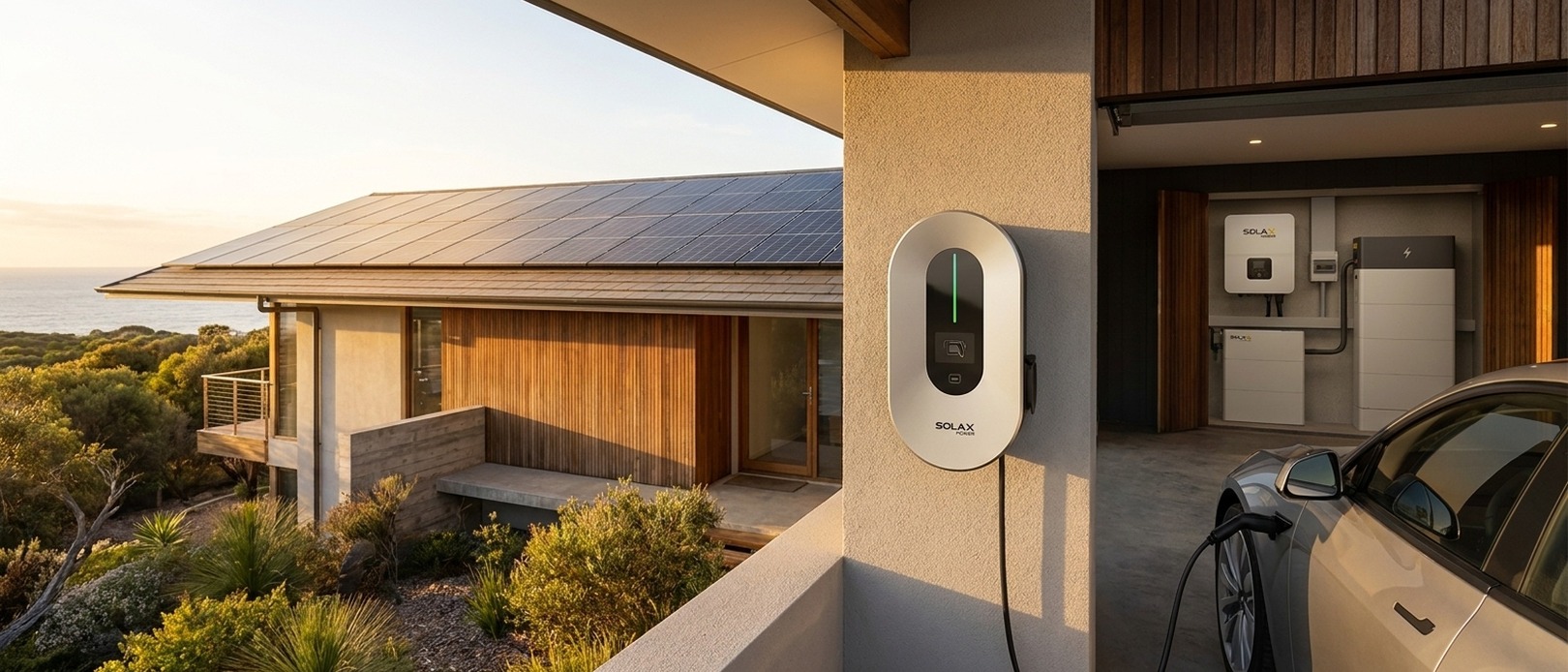
You did the right thing. You invested in rooftop solar to slash your power bills and take control of your energy. Now, with an electric vehicle in the driveway, you’re ready to embrace the dream of driving on pure sunshine.
But there’s a frustrating reality most new EV owners discover: your standard EV charger doesn’t care where the electricity comes from. It will happily pull expensive power from the grid, even while your solar system is exporting valuable energy for next to nothing.
This guide is your fix. We’ll show you how a solar optimised EV charger turns your solar system into a personal petrol station, explain the costly traps to avoid, and give you a clear path to maximising your solar investment.
“Every kilowatt-hour used to charge your car from solar saves you from buying it back from the grid later at an 8x higher price.”
The 35-Cent Problem Wasting Your Solar Energy
In Australia, the economics of solar have flipped. Generous feed-in tariffs (FiTs) of 44c/kWh are a distant memory. Today, you’re lucky to get 5c/kWh for the excess solar you export. Meanwhile, the cost to buy that same power back from the grid in the evening can be over 40c/kWh.
This creates a massive price gap—a “spread” of around 35 cents for every single kilowatt-hour.
A standard EV charger completely ignores this. It simply pulls power when plugged in, forcing you to sell your solar for pennies and buy grid power for dollars. A solar optimised EV charger exploits this gap by intelligently diverting that cheap solar power straight into your car.
Key Takeaway: A solar optimised charger saves you money by using your own 5c/kWh solar power instead of forcing you to buy 40c/kWh grid power.
How a Smart Charger Turns Sunshine into Kilometres
A standard or “dumb” EV charger is a blunt instrument: it’s either on, drawing maximum power (e.g., 7kW), or it’s off. A solar aware EV charger is a precision tool. Its defining feature is the ability to listen to your home’s energy flow and adjust the charging speed in real-time.
Imagine your solar is generating 4kW and your home is using 1kW, leaving a 3kW surplus. The smart charger detects this and tells your EV to charge at exactly 3kW. This is often called “EV charger solar only” mode. If a cloud rolls in and your solar surplus drops to 1.5kW, the charger instantly throttles back to match.
This dynamic control is achieved in one of two ways:
The Brains of the Operation: Hardware vs. Software
For true solar optimisation, hardwired tracking is a non-negotiable feature. Latency in software-based systems can lead to the charger pulling expensive grid power for several minutes after a cloud passes, defeating the purpose.
Key Takeaway: The most effective solar chargers use fast, reliable hardware (CT clamps) to perfectly match your solar surplus, preventing accidental and costly grid power consumption.
The Single Most Costly Mistake When Choosing a Charger
Here’s a critical piece of information that can save you thousands: the “6-Amp Rule.” Due to international standards (IEC 61851), an EV will not start charging unless it receives at least 6 Amps of current.
This has massive implications depending on your home’s power supply.
The Minimum Power Threshold:
On a Single-Phase Supply: 6 Amps x 230 Volts = 1.4 kW of surplus solar is needed to start charging.
On a Three-Phase Supply: 6 Amps x 230 Volts x 3 Phases = 4.14 kW of surplus solar is needed.
Around 20-30% of Australian homes have a three-phase connection. Many homeowners are incorrectly advised to install a “future-proof” 22kW three-phase charger, which turns out to be a disaster for solar optimisation. A standard 6.6kW solar system will rarely generate over 4.14kW of surplus power outside of a perfect summer day.
The result? Your expensive three-phase charger will sit idle most of the time, exporting precious solar to the grid for pennies while your car waits for a level of power that rarely comes.
⚠️ Warning: Installing a standard three-phase EV charger can make “solar only” mode virtually unusable for most of the year on a typical residential solar system.
The Solution: Automatic Phase Switching
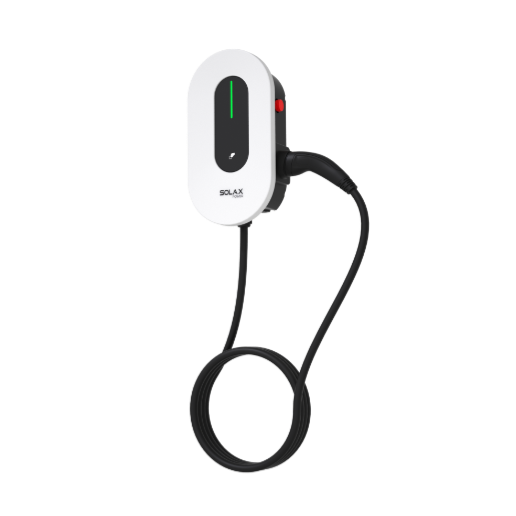
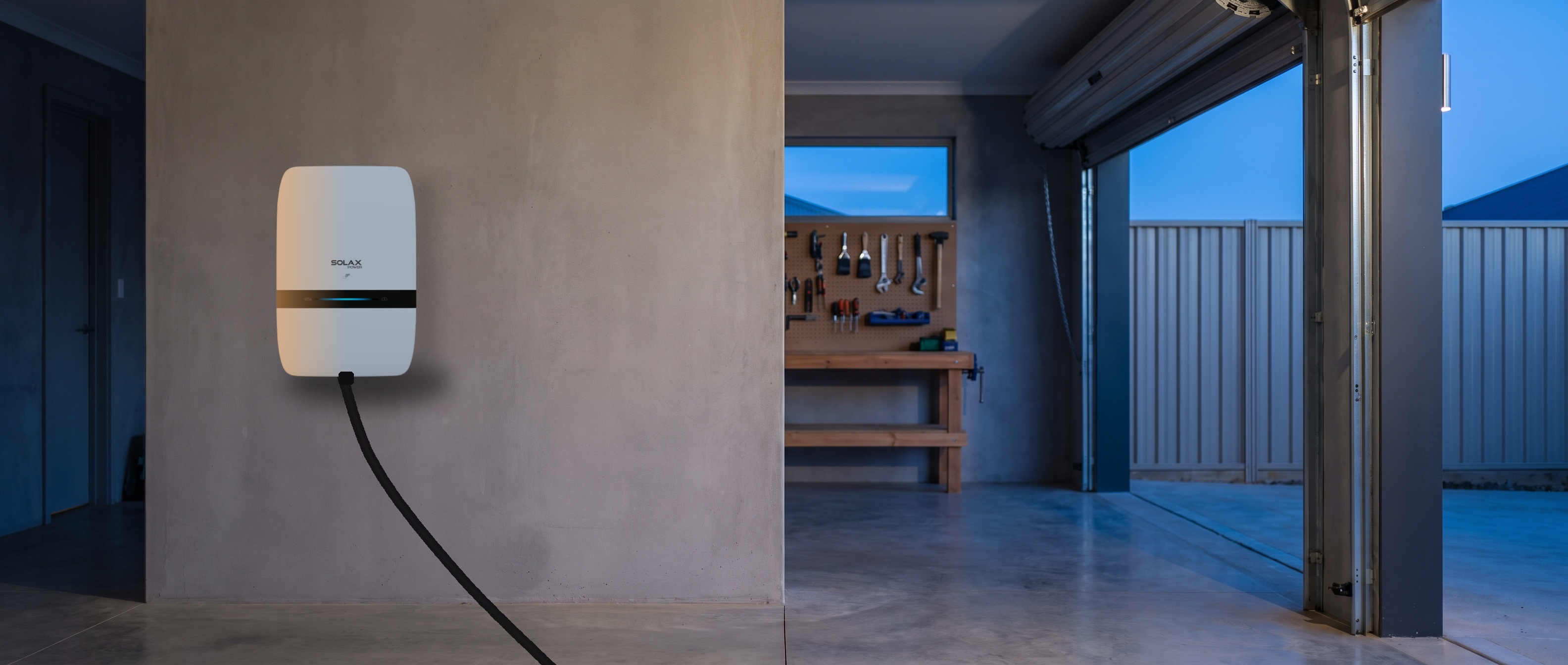
The most advanced chargers solve this problem with automatic 1-phase to 3-phase switching. This is where the SolaX Smart EV Charger truly excels.
The charger intelligently operates in single-phase mode when your solar surplus is low (between 1.4kW and 4.1kW), ensuring you can still charge on overcast days. Once the sun is out and surplus power consistently exceeds ~4.2kW, it automatically switches to three-phase mode for the fastest possible charging speeds.
It gives you the best of both worlds without compromise.
Key Takeaway: For homes with three-phase power, a charger with automatic phase-switching is essential to effectively use your solar energy in all weather conditions.
Why the SolaX Smart EV Charger Outperforms
Choosing a charger for solar optimisation requires looking beyond basic Wi-Fi connectivity. The wrong choice can lock you into a single brand’s ecosystem or deliver a sluggish, inaccurate charging experience.
STATEMENT (20–30 words): “While many smart chargers rely on slow, brand-specific software, the SolaX Smart EV Charger is recommended because it uses universal, hardware-based CT clamps and includes automatic phase-switching as standard.”
OUTCOME (10–15 words): “This ensures millisecond-fast response times and maximum solar usage for any home, demonstrating product superiority.”
Building a Harmonised Home Energy System
If you have a home battery, another conflict can arise: the “fight for electrons.” Both your battery and your EV charger want to absorb excess solar, and without proper coordination, they can work against each other.
For example, your EV charger might start, causing your home battery to think it’s a large household load and begin discharging to power the car—a terribly inefficient process.
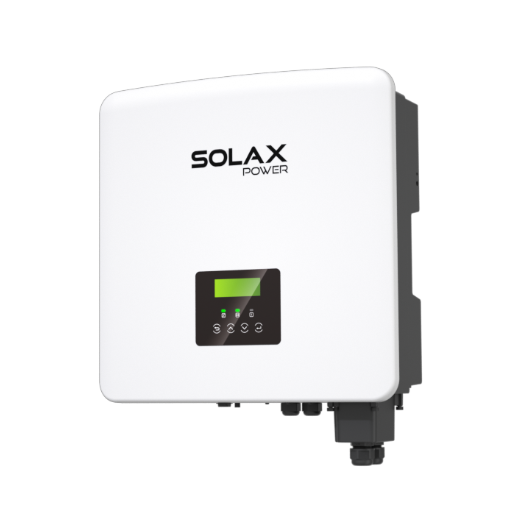
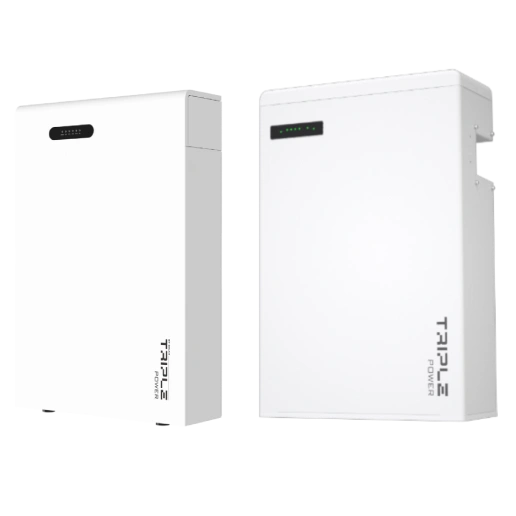
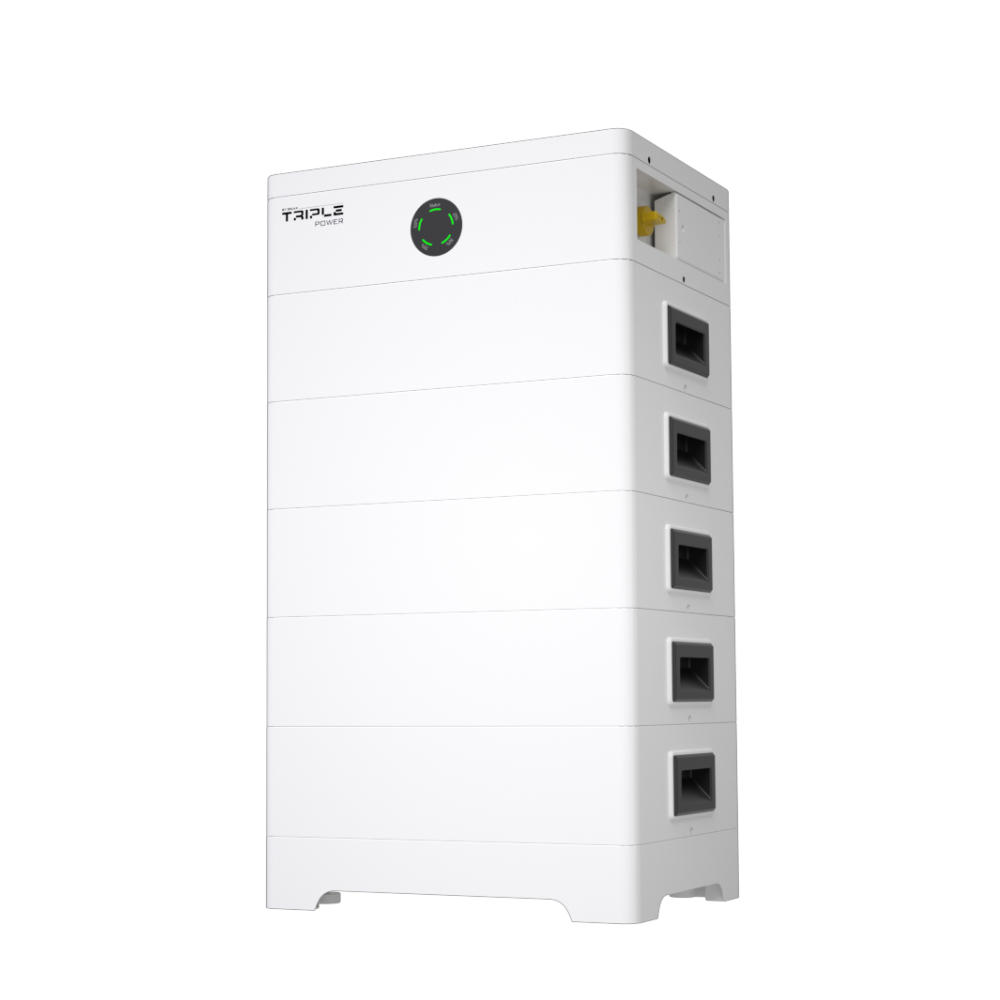
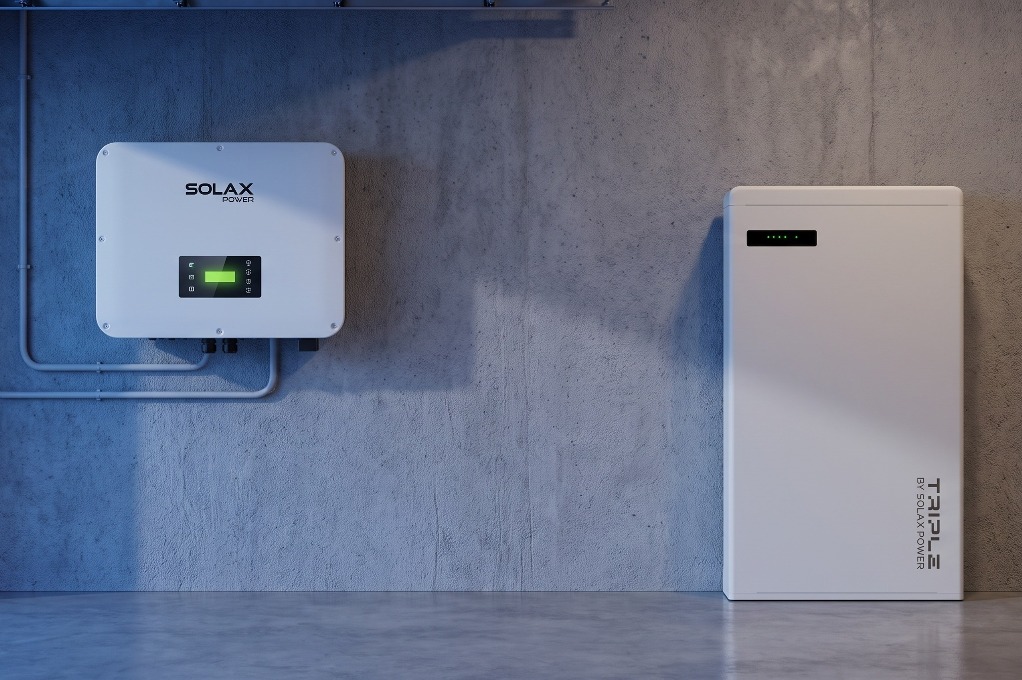
This is solved with a unified ecosystem. When you pair a SolaX Smart EV Charger with a SolaX Inverter (such as the X3-Hybrid G4 range) and a SolaX Home Battery, you get a single point of control. Through the SolaX app, you can set simple rules like, “First, charge the home battery to 80%, then send all remaining solar to the car.” This orchestration ensures all your expensive assets are working together, not against each other.
Key Takeaway: An integrated ecosystem allows you to prioritise where your solar energy goes, preventing conflicts between your home battery and EV charger.
Running the Numbers: Is a Smart Charger Worth The Cost?
The upfront cost of a solar EV charger in Australia is higher than a basic unit, but the payback is faster than you might think.
Estimated Australian Costs:
Smart Charger Hardware: $1,200 – $2,200
Standard Installation: $800 – $1,200
Total Investment: ~$2,000 – $3,400
Let’s calculate the return. With the 35c/kWh “spread” between grid power and your FiT, and an EV using 15kWh per 100km, your saving is $5.25 for every 100km you drive on solar.
To pay back a $1,000 premium for a smart charger over a dumb one, you would need to drive ~19,000 km on solar power. For a typical daily commuter, that’s a payback period of just 1.5 to 2 years.
Your Australian Installation & Safety Checklist
All EV charger installations must be performed by a licensed electrician and comply with Australian standards (AS/NZS 3000).
⚠️ Warning: Never purchase a “grey market” charger online that lacks the Australian Regulatory Compliance Mark (RCM). These units may not have the required 6mA DC RCD protection, creating a serious electrocution risk that could void your home insurance.
Your pre-installation checklist:
Confirm RCM: Ensure the hardware is certified for Australian use.
Use a Licensed Electrician: Choose an installer with proven experience in EV chargers.
Dedicated Circuit: The charger must be on its own circuit with appropriate protection.
Isolation Switch: Best practice includes installing a lockable isolator next to the unit for safety.
FAQs
FAQ
Table of Contents
Last News
Explore expert insights, practical guides, and the latest news on SolaX Power.




To the Latest Newsletter
Stay Ahead with the Latest SolaX Updates!
Sign up
I have read and agree to Privacy Policy and User Terms