





















April 02, 2026
The Smart Fleet Revolution: How to Power Your EVs with Commercial Solar
Share my #SolaXStory


You’ve made the smart move, upgrading your commercial fleet to electric vehicles to slash fuel costs and take advantage of government tax breaks. The chargers are installed, the vehicles are ready, but a hidden financial trap is waiting. A single, poorly timed charging session could add over $2,500 to your next monthly power bill, instantly wiping out your savings.
This isn’t a scare tactic; it’s the reality of Australian commercial electricity tariffs. The “Demand Charge Trap” punishes businesses for high-power usage, and a bank of EV chargers is the perfect trigger. But what if you could turn this liability into your greatest asset?
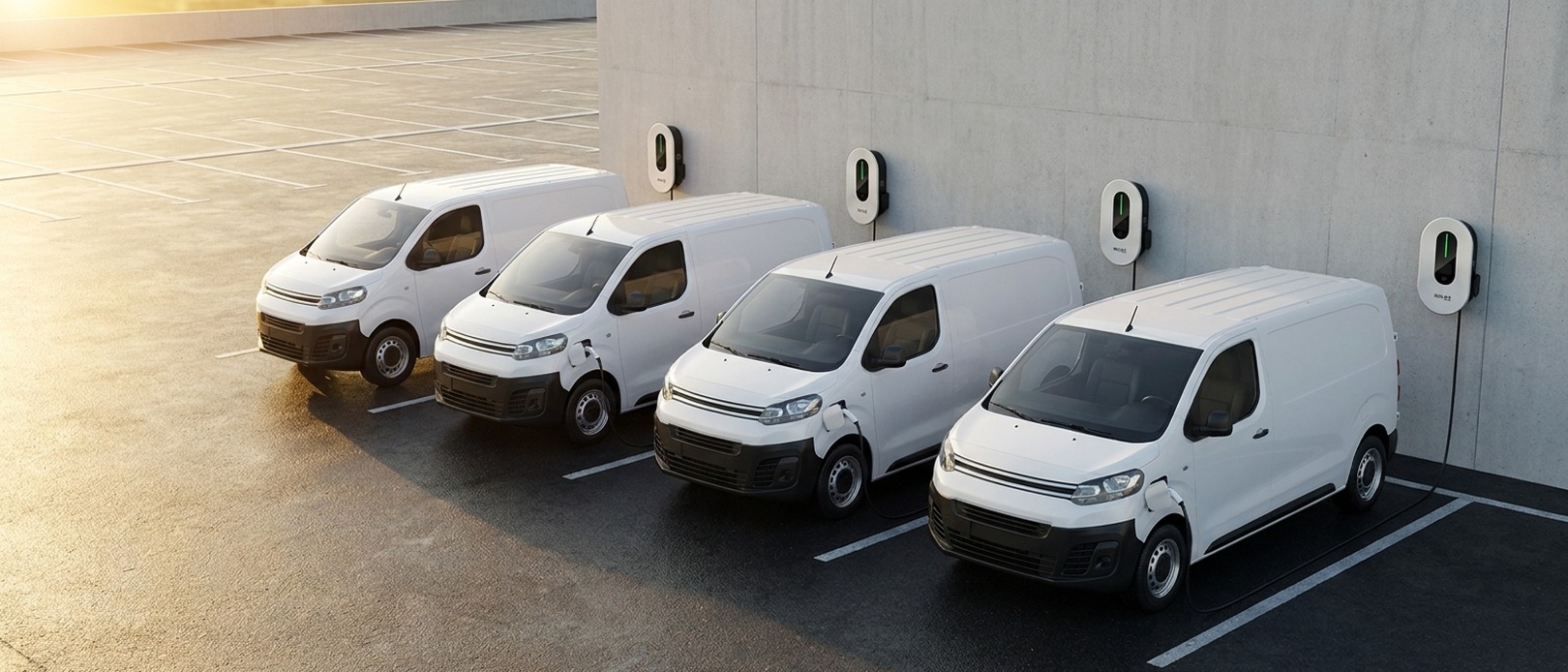
By intelligently integrating ev charging stations with commercial solar system, you don’t just avoid penalties—you transform your fleet into a mobile energy storage asset. You’ll use your own clean, free energy to power your vehicles, making your solar investment work harder and future-proofing your business against volatile energy prices.
“A single charging session can trigger thousands of dollars in fees, making unmanaged charging financially unsustainable.”
The $2,500 Mistake: Australia’s Demand Charge Trap
Unlike your home electricity bill, which is mostly based on how much energy you use (kWh), your commercial bill has a hidden sting in its tail: the demand charge.
This fee is calculated based on the single highest 30-minute spike of power your business draws from the grid during a billing month. It’s designed to penalise sudden, high usage.
Here’s how it catches businesses out:
Your facility has a normal peak usage of 50kW.
You install two 50kW DC fast chargers. Both are used at once, drawing 100kW.
For that 30-minute window, your site’s total demand spikes to 150kW.
With a network demand tariff of $25 per kVA, that 100kW spike just added $2,500 to that month’s bill.
This charge applies even if the chargers were only used once all month. It’s the single biggest financial risk to any commercial EV charging project in Australia, and it can destroy your return on investment.
Key Takeaway: Unmanaged EV charging can trigger massive monthly demand charges based on your single highest power spike, making it financially unsustainable without a smart strategy.
The Solar Soak: Your Secret Weapon Against High Power Bills
Australia’s abundance of solar has created a midday energy glut. This “duck curve” means the value of solar energy you export back to the grid is incredibly low—often just 3-6c/kWh. Meanwhile, you’re still paying 25-35c/kWh or more to import power from the grid.
Integrating ev charging stations with commercial solar system flips this equation on its head.
This strategy, known as “solar soak,” means you use your own abundant, free midday solar generation to charge your vehicles “behind-the-meter.” Instead of exporting that energy for pennies, you’re using it to displace two major costs:
Expensive grid electricity you would have paid to charge your fleet.
Thousands of dollars in petrol or diesel costs.
“You effectively value your solar energy at the full 30c/kWh retail rate you avoid paying, not the 5c/kWh you’d get for exporting it.”
Suddenly, your solar system isn’t just powering your building; it’s fuelling your entire transport operation. This dramatically shortens the payback period for both your solar and EV infrastructure, especially for fleets parked during daytime hours.
Key Takeaway: Solar soak uses your excess midday solar to charge your fleet, maximising the value of your generated energy and directly displacing high grid electricity and fuel costs.
Building Your Charging Fortress: 3 Strategies for Success
Avoiding the demand charge trap while maximising your solar soak requires a smart, integrated system. Simply plugging in chargers won’t work. SolaX provides a complete ecosystem to implement these proven strategies, protecting your ROI.
These strategies are not just theoretical. Choosing the right one is critical. While a basic solution might seem cheaper upfront, a battery-based system is often essential for heavy fleets that need guaranteed charge times regardless of the weather.
Key Takeaway: A successful system actively manages energy flow using solar matching, battery storage, or load management to prevent grid spikes and maximise self-consumption.
The Blueprint for a Bulletproof Solar EV System
A true commercial solar EV charging system is a synchronised ecosystem, not just a collection of parts. Understanding the key components helps you specify a system that is efficient, reliable, and ready for the future.
The Core Components:
Commercial Solar PV System: The rooftop array (30kW to 1MW+) that acts as your on-site power plant.
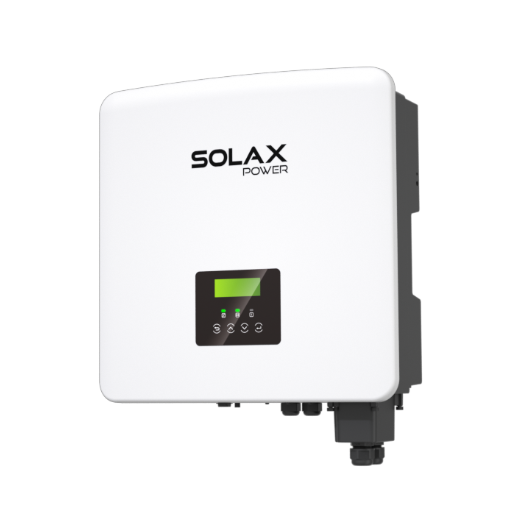
Smart Hybrid Inverter: The brain of the operation. A SolaX Commercial Inverter doesn’t just convert solar power; it orchestrates the flow of energy between your panels, battery, building, and chargers.
EV Chargers (EVSE): The hardware delivering power to your fleet, from 22kW AC chargers for overnight charging to 50kW+ DC units for rapid top-ups.
Energy Meter/CT Clamp: A small but vital device at your grid connection point. It tells the system when you are importing or exporting power, enabling smart charging decisions in real-time.
Charge Point Management Software (CPMS): The software platform that gives you control. It manages user access, schedules charging to match solar generation, and provides detailed reporting on energy use.
⚠️ Warning: The biggest mistake is using a “dumb” timer to run chargers from 10 am to 3 pm. This is hopelessly inefficient, as it can’t adapt to a cloudy day or a sudden spike in your building’s energy use, leading to grid draw and potential demand charges.
The most advanced systems use cloud-based APIs to allow the solar inverter, battery, and chargers to communicate constantly. This ensures every decision—from charging speed to battery discharge—is optimised to save you the most money.
Key Takeaway: A properly integrated system uses a smart inverter and energy meter to orchestrate energy flow, ensuring chargers only use free solar power or stored battery energy.
Navigating the Red Tape: Australian Compliance Made Clear
Installing a commercial EV charging system involves a web of codes and standards. Getting it wrong can lead to costly rework, compliance failures, and insurance headaches.
Here’s what your installer must get right:
✓ NCC 2022 “EV Ready” Rules: For new buildings, the National Construction Code now requires dedicated electrical distribution boards and cable pathways to support future EV charger installations.
✓ AS/NZS 3000 Wiring Rules: EV charging is a “continuous load,” meaning cables must be oversized to handle heat, especially in Australian climates. Standard calculations don’t apply.
✓ RCD Safety: To prevent electric shock, chargers require specialised RCD protection (either a built-in RDC-DD or a more expensive Type B RCD). A standard RCD can be “blinded” by an EV and fail to work.
⚠️ Warning: Fire safety is a major challenge in Australia, especially for basement installations. Fire and Rescue NSW has designated EVs as a “Special Hazard.” Engage a fire engineer early in your design process to avoid being denied insurance coverage later.
Key Takeaway: Australian compliance is complex, covering everything from cable sizing to fire safety. Using an experienced installer who understands these specific requirements is non-negotiable.
Proof It Works: Real Businesses, Real Savings
Leading Australian companies are already proving the power of this integrated approach.
Case Study: Team Global Express (Heavy Fleet Logistics)
Challenge: Charging a fleet of 60 electric trucks in Sydney would require a multi-million dollar grid upgrade.
Solution: They built an on-site microgrid with 400kW of solar and a 1MW commercial BESS.
Outcome: The solar charges the battery all day. The battery then charges the trucks overnight, completely avoiding grid usage and demand charges. The project saved thousands in its first few hours of operation.
Case Study: Vicinity Centres (Retail & Customer Charging)
Challenge: Provide reliable EV charging as an amenity for shoppers across centres like Chadstone.
Solution: Leveraging their massive 28MW+ rooftop solar portfolio to power the chargers and installing on-site batteries.
Outcome: They use stored solar energy to power fast chargers during the busy evening shopping peak, providing a valuable service powered by their own clean energy.
Key Takeaway: From heavy logistics to retail, major Australian companies are using solar and battery storage as the standard solution for cost-effective, high-power EV charging.
The Future-Ready Fleet: Why Your Next Step Matters
The integration of solar and EV charging is just the beginning. The next step is turning your site into an “Energy Superhub.”
Technologies like Vehicle-to-Grid (V2G) will allow your fleet’s batteries to provide services back to the grid, creating entirely new revenue streams. Your depot won’t just be an energy consumer; it will be an active, profitable participant in the energy market.
This future requires technology built on open standards, not proprietary “walled gardens.” SolaX’s ecosystem is built on protocols like OCPP, ensuring your investment today is ready for the opportunities of tomorrow. By integrating EV charging with solar, you’re not just solving a problem—you’re preparing your business for the future of energy.
Learn more about future-proofing with solar batteries.
Table of Contents
Last News
Explore expert insights, practical guides, and the latest news on SolaX Power.





To the Latest Newsletter
Stay Ahead with the Latest SolaX Updates!
Sign up
I have read and agree to Privacy Policy and User Terms